
Introduction
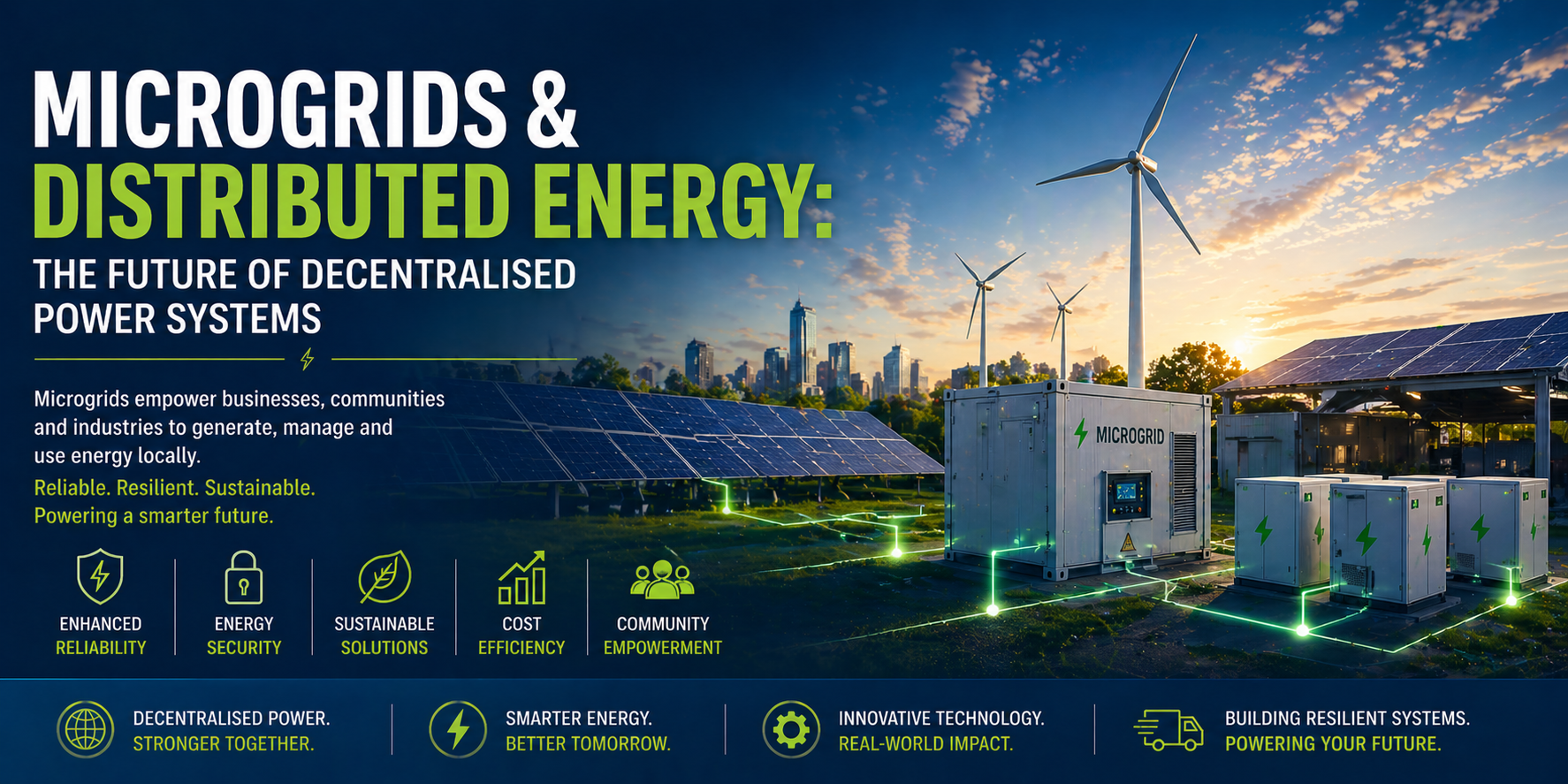
The global energy landscape is shifting away from traditional centralised power generation toward more flexible and resilient systems. One of the most important developments in this transition is the rise of microgrids and distributed energy systems.
Microgrids allow businesses, communities, and industrial operations to generate and manage their own electricity locally. This approach improves reliability, enhances energy security, and reduces dependence on unstable grid infrastructure.
What Are Microgrids and Distributed Energy Systems?
A microgrid is a localised electrical system that can operate independently or alongside the main power grid. It typically includes its own power generation sources, energy storage systems, and control mechanisms.
Distributed energy systems refer to smaller-scale power generation sources located close to where electricity is used. These systems may include:
• Solar photovoltaic (PV) systems
• Wind energy installations
• Backup generators
• Battery storage systems
Together, microgrids and distributed energy systems create more flexible and decentralised electricity networks.
Key Applications of Microgrids
Solar-Powered Communities
Microgrids are increasingly used in residential and rural communities powered by solar energy. These systems provide reliable electricity in areas where traditional grid infrastructure is limited or unreliable.
Industrial Microgrids
Manufacturing plants and industrial facilities use microgrids to ensure consistent power supply for operations. This reduces downtime and protects critical equipment from power interruptions.
Remote Mining Operations
In regions where grid access is limited, such as remote mining sites, microgrids provide a reliable and cost-effective energy solution. These systems often combine diesel generation with renewable energy sources and storage technologies.
Benefits of Microgrids and Distributed Energy
Improved Reliability
Microgrids can operate independently during grid failures, ensuring continuous power supply for critical operations.
Energy Independence
Businesses and communities gain greater control over their energy production and consumption, reducing reliance on external power providers.
Cost Efficiency
By optimising energy generation and reducing transmission losses, microgrids can lower overall energy costs over time.
Integration of Renewable Energy
Distributed energy systems make it easier to incorporate renewable energy sources into electrical infrastructure, supporting sustainability goals.
The Role of Electrical Engineering in Microgrid Development
The successful implementation of microgrids requires specialised electrical engineering expertise. Engineers are responsible for designing, integrating, and optimising these systems to ensure safe and efficient operation.
Key engineering services include:
• Electrical system design and integration
• Load analysis and energy optimisation
• Power distribution and control systems
• Renewable energy integration
• Electrical infrastructure upgrades
Microgrid Solutions with AIS Electrical Engineers
As demand for decentralised energy solutions grows, experienced engineering partners are essential. AIS Electrical Engineers provides professional services to support the design and implementation of microgrids and distributed energy systems.
With expertise in electrical audits, power distribution, and system optimisation, AIS Electrical Engineers assists businesses and industrial operations in developing reliable and efficient energy solutions.
By analysing existing infrastructure and energy requirements, AIS Electrical Engineers
helps clients:
• Improve energy reliability and resilience
• Integrate renewable energy systems
• Optimise electrical distribution networks
• Reduce operational risks associated with power disruptions
Conclusion
Microgrids and distributed energy systems are transforming the way electricity is generated and managed. By enabling localised energy production and improving system resilience, these technologies offer a practical solution to modern energy challenges.
With the right electrical engineering expertise, organisations can implement microgrid solutions that are efficient, reliable, and future-ready.
Need more information?
Contact Us
Address
Unit 30, Sildale Park, 150 Conveyer Rd, Silvertondale, Silverton, 0181
Phone
+27 (0)12 012 6173
Follow Us











Brandon and his team are professional, responsive, and genuinely care about meeting our needs. Communication is clear and timely, and they go above and beyond to make sure everything is handled smoothly.
Highly recommend 💯