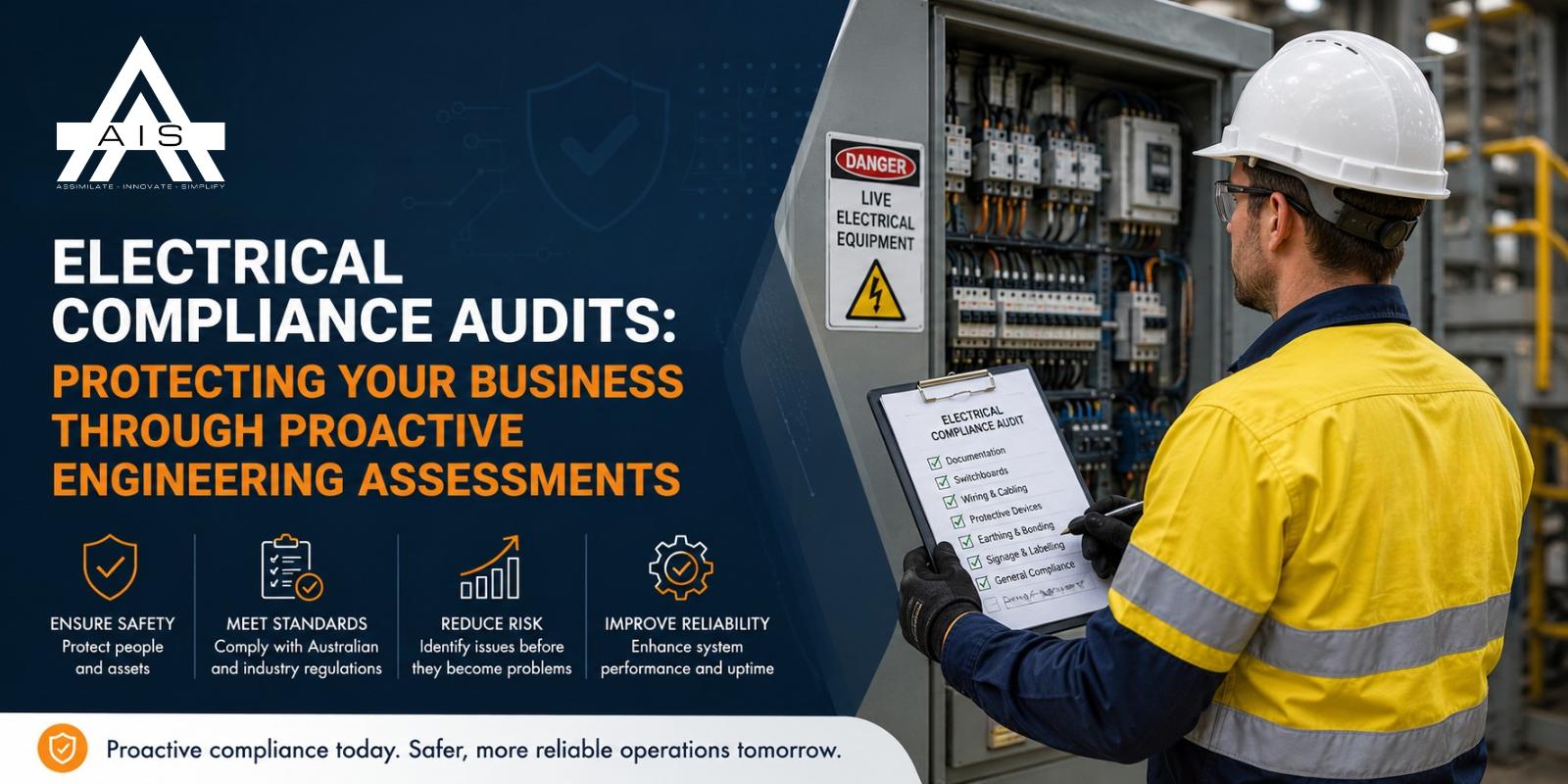
Electrical Compliance Audits: Protecting Your Business Through Proactive Engineering Assessments
Introduction
Electrical systems form the backbone of modern industrial, commercial, and mining operations. Yet many businesses only become aware of electrical compliance issues after experiencing equipment failures, safety incidents, or regulatory inspections. Electrical compliance audits provide a structured assessment of electrical infrastructure, ensuring installations meet applicable standards, operate safely, and continue to support business operations effectively.
For facility managers, plant engineers, and business owners, regular electrical compliance audits are an essential tool for reducing risk, improving reliability, and protecting personnel.
What Is Electrical Compliance Audits?
An electrical compliance audit is a detailed evaluation of an electrical installation performed by qualified engineering professionals. The audit assesses whether electrical systems comply with relevant regulations, industry standards, and engineering best practices.
The process typically includes the inspection of:
- Distribution boards and switchgear
- Transformers and substations
- Earthing and bonding systems
- Cable installations and routing
- Protection systems and relays
- Backup power systems
- Power quality considerations
- Electrical documentation and records
The objective is to identify potential safety hazards, compliance gaps, and operational risks before they result in costly failures or accidents.
Why Electrical Compliance Audits Matter
Enhanced Safety
Electrical faults can result in fire, equipment damage, serious injury, or loss of life. Compliance audits help identify unsafe conditions such as:
- Damaged equipment
- Inadequate earthing
- Incorrect circuit protection
- Overloaded electrical systems
- Non-compliant installations
Addressing these issues improves workplace safety and reduces liability exposure.
Improved System Reliability
Many electrical failures develop gradually over time. An audit can uncover hidden issues before they escalate into major operational disruptions.
Early identification of problems allows businesses to plan maintenance and upgrades proactively rather than responding to unexpected breakdowns.
Regulatory Compliance
Businesses are responsible for maintaining electrical installations that comply with applicable regulations and standards. Compliance audits provide documented evidence that systems have been professionally assessed and that corrective actions have been identified where necessary.
This documentation can be particularly valuable during inspections, insurance assessments, and safety reviews.
Reduced Operational Costs
Electrical inefficiencies often go unnoticed for years. Compliance audits frequently identify opportunities to:
- Improve power factor
- Reduce energy losses
- Optimise system loading
- Improve equipment performance
- Extend asset lifespan
These improvements can result in significant long-term cost savings.
Common Issues Identified During Audits
Experienced engineers frequently encounter:
Inadequate Earthing Systems
Poor earthing can compromise equipment protection and increase safety risks. Audits verify that earthing systems are correctly designed, installed, and maintained.
Overloaded Circuits
Business expansion often places additional demands on existing electrical infrastructure. Circuits and equipment that were originally adequately sized may become overloaded over time.
Outdated Protection Settings
Protection relays and circuit breakers require periodic review to ensure they continue to provide effective fault protection under changing operating conditions.
Documentation Discrepancies
Accurate single-line diagrams and electrical drawings are critical for safe maintenance and future upgrades. Audits often reveal documentation that is outdated or incomplete.
Switchgear Deterioration
Ageing switchgear components can become unreliable and increase the likelihood of unexpected failures.
The Role of Professional Engineering Expertise
Electrical compliance audits should be conducted by qualified engineering professionals with experience in industrial, commercial, and utility environments.
Professional engineers not only identify non-compliance issues but also provide practical recommendations that align with operational requirements and budget constraints.
This engineering approach enables organisations to prioritise corrective actions based on risk, safety impact, and operational importance.
How Often Should Electrical Compliance Audits Be Performed?
The appropriate frequency depends on factors such as:
- Facility type
- Equipment age
- Environmental conditions
- Operational criticality
- Regulatory requirements
For many industrial and commercial facilities, periodic audits form an important part of an overall asset management and maintenance strategy.
Facilities operating in demanding environments such as mining, manufacturing, and heavy industry may require more frequent assessments.
Partner with AIS Electrical Engineers
At AIS Electrical Engineers, our experienced engineering team provides comprehensive electrical compliance audits designed to improve safety, reliability, and operational performance.
From substations and switchgear to power quality analysis and protection system reviews, we help organisations identify risks, maintain compliance, and optimise electrical infrastructure for long-term success.
Need more information?
Contact Us
Address
Unit 30, Sildale Park, 150 Conveyer Rd, Silvertondale, Silverton, 0181
Phone
+27 (0)12 012 6173
Follow Us










Brandon and his team are professional, responsive, and genuinely care about meeting our needs. Communication is clear and timely, and they go above and beyond to make sure everything is handled smoothly.
Highly recommend 💯

What really stands out is how little input they need to get things spot on. The service is always professional but still friendly and easy to work with, which is why they’re my go-to team whenever I need a control panel built, no matter the size.
Keep up the awesome work, AIS!