How to increase WWTP treatment capacity with an aeration system upgrade (Part 1)
Author
Karabo Nthethe (Pr.Eng.)
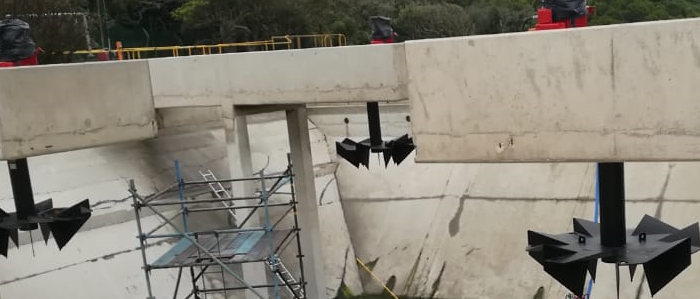
A Wastewater treatment plant (WWTP) receives wastewater from homes, businesses, and many industries. It purifies it using a natural process to remove harmful substances before the effluent is released into the environment.
A WWTP requires treatment capacity upgrades when:
- A WWTP has been in service for a long time, and the infrastructure, equipment, and technology are old due to a lack of investment resulting in poor plant performance and violation of its operating license
- Regulators make discharge quality standards stricter to improve the standard of effluent which enters the environment
- Operating costs become unsustainable to keep running the WWTP as it is
- Population growth and urban development create higher volumes of wastewater, resulting in hydraulically and organically overloaded WWTP affecting plant performance.
Extension or upgrade of a WWTP treatment capacity can incur high costs for construction works, equipment, and installation to meet new treatment capacity demands. This article discusses how upgrading or replacing an existing aeration system can improve the WWTP performance and increase its treatment capacity to receive extra load without additional civil infrastructure, acquire another land, or modify existing tanks.
What is a WWTP capacity, and how does it affect plant performance
A WWTP capacity is a complicated function of physical parameters like tank sizes and equipment design, influent quality, other operational factors such as sludge age and recycling rates, and water use operating license constraints. There is an average design capacity and the average current functional capacity. and both have two distinct capacities:
- Hydraulic capacity – the plant’s ability to pass a given flow rate- is determined by head loss through various treatment unit processes.
- Process organic capacity – the load (flow multiplied by concentration to give mass per time) the plant will begin to fail its operating license based on 50 percentile flowrates at the maximum load
The design capacity is the capacity of the plant to operate at the license conditions. New developments, changes in flows, and wastewater characteristics lead to the plant operating at high variations from the original design capacity and not meeting the operating license conditions.
Upgrading aeration systems to increase WWTP treatment capacity
Biological treatment uses naturally occurring microorganisms to degrade wastewater contaminants. The bacteria need oxygen to allow this biodegradation to occur. During the aeration process, oxygen is evenly distributed and circulates throughout the water in an aeration tank with mixers and aerators. Wastewater aeration tanks mix air with wastewater in an oxygen-rich environment, increasing the rate of biological activity. Upgrading, refurbishment, and optimization of the aeration system focus on the following process units:
- Diffuser technology and its configuration
- Blower technology and configuration
- Dissolve oxygen monitoring and control technologies
Increase WWTP capacity through improved aeration process efficiency by:
- Replacing a piece of outdated equipment or systems with new and advanced aeration technology
- Replacing an aeration or mixing equipment that has reached the end of its operation lifespan
- Replacing systems that have become less efficient or are not serviceable anymore
These activities aim to increase the oxygen transfer from the air into the water, where microorganisms quickly access it to break harmful pollutants.
A well-designed aeration system can increase biological treatment efficiency and reduce the time it takes for microbiological activities, resulting in increased capacity and energy cost savings.
A case study
https://ais-con.co.za/ were sub-consultants in a project to fully refurbish one of three aeration basins while fully upgrading the full power and control system.
A new ducted busbar system was specified by https://ais-con.co.za/and installed by an approved busbar manufacturer. The unit was designed to 1.1A/sqrmm, making it more than capable of carrying 1200A @ 400VAC continuously.
The plant room was further equipped with techno switch fire suppression/detection system (stat-x), epoxy coated flooring, proper lighting and steel doors.
Conclusion
Upgrading and optimization of an aeration system can be a cost-effective solution. In South Africa, many WWTPs started operating in the 70s and 80s. Due to poor structural conditions, increased population, and outdated technologies, their performance is sub-standard, resulting in non-compliance with stricter discharge standards and violation of their operating licenses. Extension or upgrade of a WWTP treatment capacity can incur high costs for construction works, equipment, and installation to meet new treatment capacity demands. It is, therefore, essential to consider optimization options that do not require extensive structural modifications but can use the existing infrastructure and optimize the process to cater to increased demand or tighter quality controls and regulations.
About the author:
Karabo Nthethe (Pr.Eng.)
Mr. Nthethe is a registered professional engineer with a background in Chemical Engineering. He is an industry subject matter expert in process engineering and design of water and wastewater treatment from 15 years as a senior engineer and in a senior management role in infrastructure planning and projects for a regional wastewater treatment municipal utility managing and operating 19 WWTP and serving a population of 3 million people and about 1000 industries. He was instrumental in changing the aeration system, reducing operational costs, and increasing process operating capacity in two WWTPs
Contact Us
Address
Unit 30, Sildale Park, 150 Conveyer Rd, Silvertondale, Silverton, 0181
Phone
+27 (0)12 012 6173
Follow Us










Brandon and his team are professional, responsive, and genuinely care about meeting our needs. Communication is clear and timely, and they go above and beyond to make sure everything is handled smoothly.
Highly recommend 💯